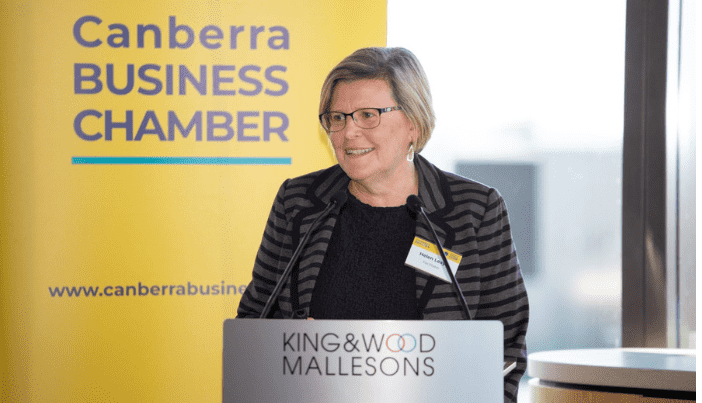
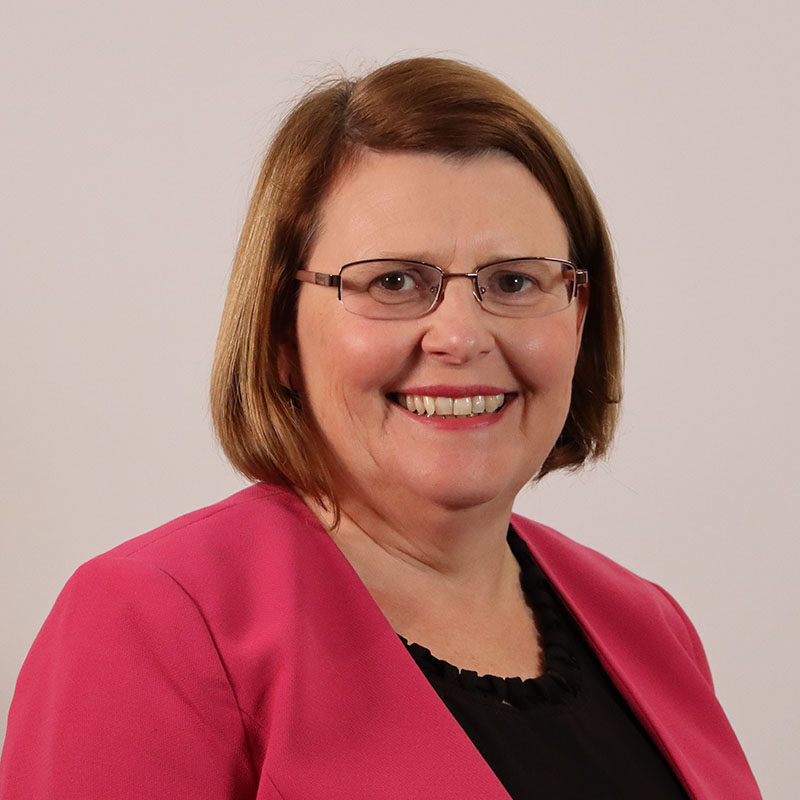
Welcome back to Fan Girl Fridays, where we celebrate the brilliant people shaping the practice of communication and engagement across Australasia. This week we’re thrilled to feature Helen Leayr, Managing Director of Communication Link, a Canberra-based agency that has been helping organisations connect with communities for more than 25 years.
In this conversation, Helen shares her career journey, her insights on engagement, and why she believes change management deserves a bigger seat at the table.
Q: Can you tell us about your career journey and how it led you into engagement?
We actually started out in events nearly three decades ago, with a largely corporate rather than government client focus. Back then, corporates would run cocktail parties, conferences, and presentations to keep stakeholders in the loop and build relationships.
Over time, we realised we could offer more value to our clients by facilitating two-way conversations rather than offering “bums on seats and buns on plates.”
That shift moved us away from 300-attendee conferences and toward great content and speakers, and workshops and conversations. This allowed us to give our clients not only connection with their stakeholders, but information to improve how they operate.
Eventually we pivoted from being an event company to being about the connections between people – hence the name Communication Link. Engagement was the natural next step.
Q: How did you transition from corporate events to government and community engagement?
Being based in Canberra, government was always the biggest client in town. About 15 years ago the ACT Government really prioritised how it engaged with its community. It’s a small jurisdiction – politicians bump into constituents at the supermarket – so meaningful conversations became a priority.
We were locals too, so it felt natural. That work has since expanded beyond Canberra to federal government policy and energy projects. One of the things I love about running a small business is that every new project brings change. Our culture is to say “yes” to opportunities, and that has taken us in some fascinating directions.
Q: How have you seen engagement evolve in government and policy circles?
Engagement is increasingly intertwined with democracy. Elections can create a tricky overlap. For example, we’re now realising with greater empathy that a policy or project that was voted for nationally can become contentious if it’s being rolled out in a region that doesn’t support it.
For example, in energy infrastructure, a national mandate might exist, but local communities may feel differently.
For years critics dismissed this type of community input as “not-in-my-backyard-ism or NIMBYism” – you know, the idea that a person can be pro windfarms, for example, but they don’t necessarily want one on their farm or in their local community.
In being overly dismissive of this point of view, I think we run the risk of swinging the pendulum too far. In trying to focus on the common good, we can sometimes undervalue the immediate impacts on local people. That tension is one of our biggest challenges.

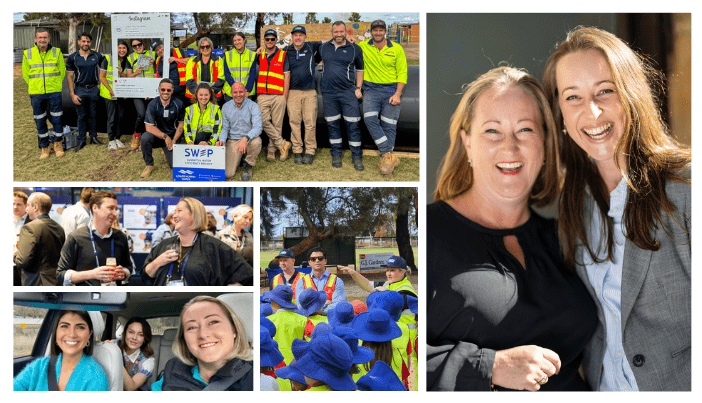
Communication Link engaging with community to support ACT Suburban Land Agency work developing of the new suburb of Kenny.
Q: You’ve said before that engagement sometimes “forgets its role in change”. Can you explain?
One of the hardest parts of being in engagement is when there’s little room for genuine influence. If decisions are already locked in, community engagement can feel hollow.
That’s where I think we need to learn from change management. In change management, especially within government agencies, the work is about helping people understand what’s changing, what they can influence, and how they’ll be supported.
Community engagement should sometimes be framed in the same way. If the outcome can’t be shifted, if we’re engaging at the “inform” level of the IAP2 spectrum, we still need to show empathy and help people adjust. Otherwise, we risk leaving communities feeling dismissed.
Q: Can you share an example?
The ACT Government’s planning reform project is a good case. We supported extensive grassroots consultation across the territory. Once the system was redesigned, the Government invested in a second phase focused purely on change management.
We ran sessions with industry, community councils, professional associations, and the general public to explain what the new system meant in practice. Most of these were online and recorded for accessibility. It didn’t mean everyone agreed with the reforms, but people understood them – and that reduced the angst. To me, that was innovative and effective.
Q: What complex challenges do you see engagement needing to address?
One of the most complex issues we face is how to invest public money. This is something I find very interesting, due to my economics background. In Australia there is a widening gap between the wealthy and those struggling to get by.
We need to move away from seeing our country’s success as being based on its GDP alone – not just from having a strong economy but seeing the way we spend public money as increasing population wellbeing. We need to ask, is everyone healthy? Do they have a happy life?
How do we spend collectively, and what return do we expect in human wellbeing? For example, it’s not easy to measure the return on investment for the NDIS, so how do we assess if the community is comfortable with the returns we are seeing?
Engagement can help communities grapple with these questions.
Q: Is engagement keeping up with the pace of technological change?
I think so – especially thanks to younger practitioners who are excited to push us forward. AI will obviously have a big impact. But one of the biggest opportunities is hybrid engagement. Too often, we run one in-person event and one online event, and the conversations are totally different.

Helen says moving to more hybrid community events will strengthen input and ideas.
There are many reasons for this: The type of people who prefer to speak in public spaces are different to those who would prefer to show up online; in-person events are subject to group-think; people who come online might face physical barriers.
But, we need these two groups of people to speak to each other.
If we invest properly, hybrid can create equal experiences for people in the room and at home. I’ve seen clients lend laptops and pay for internet access so people could participate. That’s the kind of inclusion we need more of.
Q: What advice would you give to new practitioners – and what myths would you like to bust?
Be diligent with your data. What we hear is always filtered through our own lens, and it’s easy to lose the true voices of the community in translation.
I worry that, in the quest for slick infographics and buzzwords, we sometimes overwrite people’s words with our own jargon. For example, someone might say, “I’m scared of scooters and bikes on the footpath because I’m afraid of falling over.” Which might get translated into “we need pedestrians and vehicles to have their own paths and roads.” Which, by the time it goes through architects or engineers, might get translated back to community as “transport modal separation”.
The intent is lost, the problem might go unsolved if it isn’t linked to intent – and the community may wonder if anyone actually listened. Our role is to carry community voices through, not repackage them beyond recognition.
Thank you, Helen!
Helen’s career shows how curiosity – about why people talk to each other and what outcomes they seek – can transform an events company into a trusted engagement leader.
Her call to bring change management thinking into community engagement is timely and vital. At its heart, her message tells us that engagement should be about listening with authenticity, helping communities through change – and ensuring the public purse is creating outcomes that benefit the lives of all Aussies.