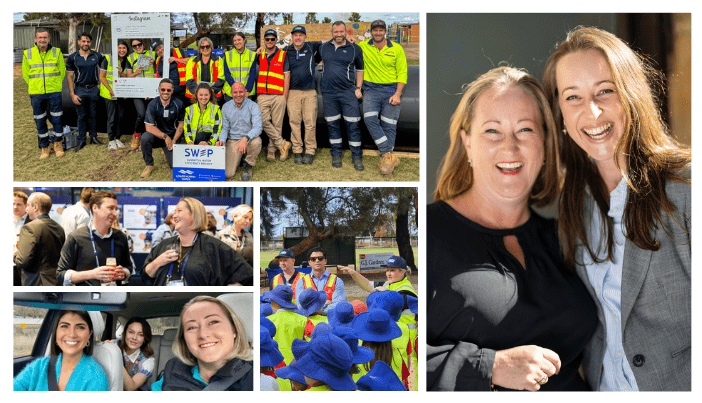
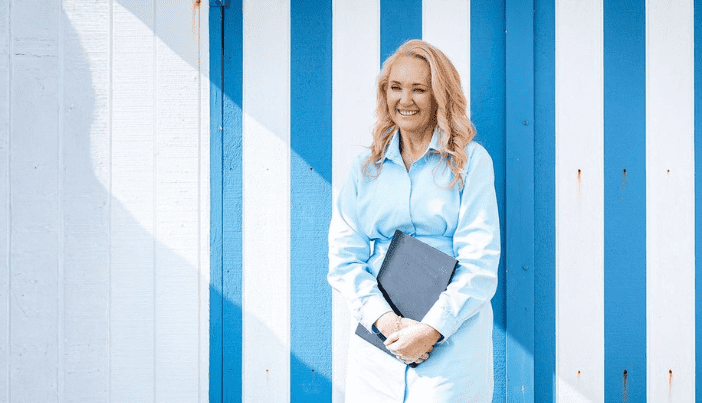
Welcome back to Fan Girl Fridays, where we spotlight the extraordinary people transforming engagement across Australasia. This week, we’re thrilled to feature Donna Groves – Founder and Managing Director of Comacon, community engagement specialist, author, podcaster, and passionate advocate for doing engagement with transparency and heart.
Donna’s career spans more than 30 years across infrastructure, natural resources, and energy, with a current focus on the renewable energy transition. In this conversation, she shares her unique journey from psychology into engagement, what she’s learned from tough projects, and the legacy she hopes to leave through mentoring First Nations engagement practitioners.
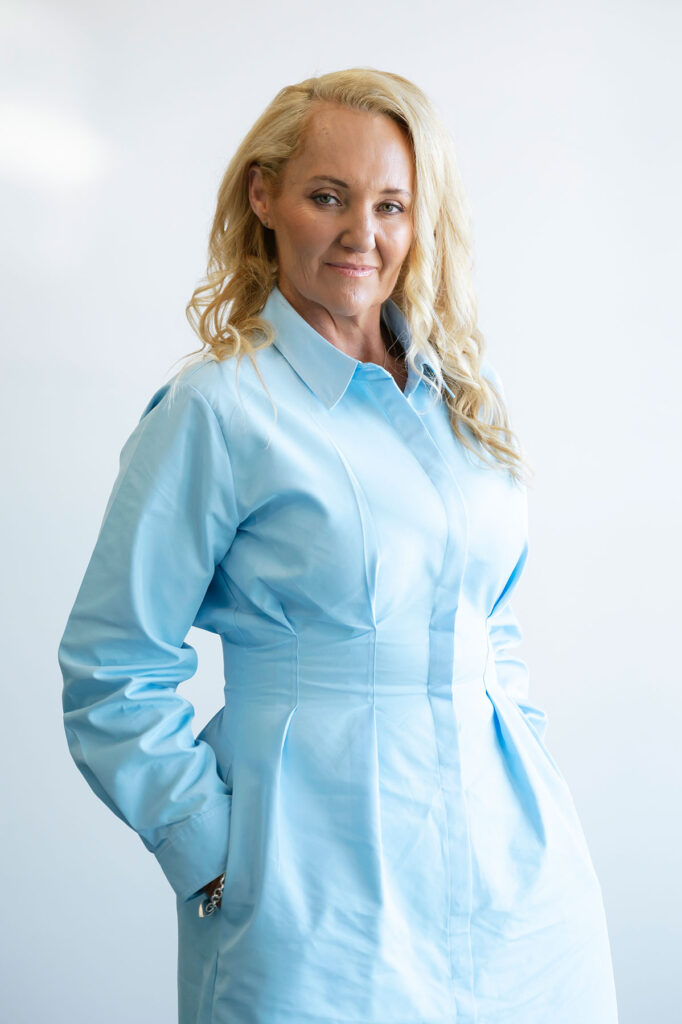
Q: Can you tell us about your career journey and how it led you into engagement?
At 17, I wanted to be a doctor. But after seeing a goat being born, I flipped that interest into psychology. You make strange choices at 17!
So, I studied clinical psychology and I specialised in juvenile schizophrenia and multiple personality disorder, but, I had two young babies at home and was dealing with a lot of suicides at work. At 22, it was a lot, and I just didn’t have the emotional regulation to separate and compartmentalise that work.
I knew about three months in that it wasn’t for me, but I finished my degree – because I’m pigheaded like that and don’t give up! I used my studies and worked in research, and my first project looked at the social impact of infrastructure on communities.
That was the turning point. From there, I became a Community Involvement Officer at the NSW RTA, and the journey into engagement began.
While I’ve never practised as a psychologist, those skills stayed with me. I’ve used them in executive coaching, sports coaching, and now in every piece of engagement work I do.
Q: How did Comacon come about?
I was working as ACT/NSW Community Engagement Manager for Abigroup, but when the company went into financial difficulties and eventually liquidation I was retrenched. I came back as a contractor – got an ABN and a week later I had my first staff member. That was 2008, and Comacon grew from there.
Over time, though, I found myself doing more admin and business development than engagement itself – which has never been my passion. Post-COVID, we shifted to a subcontractor model, which freed me up to focus on the work I love most. Right now, I’m seconded full-time into a major renewable energy developer, building their stakeholder and community engagement team.
Q: How does your psychology background influence your work today?
Wellbeing has always been my starting lens. I ask: How will this project impact the community’s wellbeing? How can it make their lives better?
It’s not about selling an idea or forcing agreement. If we’re transparent -explaining decisions, listening deeply, being honest about mistakes – communities may not love the outcome, but they’ll accept it and feel respected.
I’ve found that authenticity and transparency don’t just protect practitioners’ wellbeing, they transform the work. When the engagement is genuine, the angry voices soften because people feel heard.
Q. How has the field of engagement changed over time – is it better understood and embraced than when you first started out?
It’s shifted, but it depends on the organisation, the department you’re working in and it depends on the leader of that department.
That said, there are a lot of fantastic project managers, leaders and engineers that have embraced community engagement because they understand that we’re actually a help, not a hindrance. But there’s still some of that old-school thinking that prevails, people that see our work as fluffy, us a pain in the butt and community engagement just a box that needs to be ticked.
I fight the good fight as much as I can in helping shift this mentality.

Left to right: Donna Groves, Sequana Director of Communications, Engagement & Marketing Kate Kernaghan and Engagement Institute CEO Marion Short.
Q: Can you share a project that really tested you?
North East Link Early Works nearly broke me. The community impacts were astronomical – people literally had their front doors blocked. Engagement was extensive, but at times it felt like we were throwing money at problems instead of channelling understanding and empathy. The solutions we were “allowed” often didn’t meet the needs of the community.
The road was definitely needed, but the drivers’ needs weren’t necessarily synonymous with community needs and concerns. It was a powerful lesson that without empathy and transparency, projects risk becoming political bulldozers rather than community solutions.
Q: You’re now working on major renewable projects. With so much contention in this space, what’s the key to getting it right?
What I’m seeing is that communities don’t necessarily object to renewables themselves, at most they are often ‘agnostic’ to the idea – they object to poor behaviour from developers. Fly-in, fly-out teams, land banking, and lack of transparency leave a sour taste.
The teams I work with takes a different approach: as a developer–owner–operator, they have a long-term presence in the community and deliver projects rather than just speculating. They also embrace shared benefit agreements, social impact assessments and upfront, genuine First Nations engagement.
When people know you’re in their community for 30 plus years – not just dipping in to make a quick profit – they respond more positively.
The renewable transition is happening whether people like it or not. As someone at a boardroom lunch put it recently: get on the bus – or get run over by it. But how we bring communities on that journey – that makes all the difference. I am extremely grateful that I’m front and centre doing engagement during this transition. I am getting a genuine opportunity to ensure that First Nations and the wider community get real benefits from these projects above and beyond the environmental benefits of renewables.
Q. You’ve written books and host a podcast. What drew you to those platforms?
The first book came from a huge change in my life – it was personal fulfilment. The second, A Difficult Woman, was me stepping into my power and encouraging other women to do the same. I’m tired of women being called “difficult” for being assertive when men are called “leaders.”
I love storytelling because it allows honesty. I’m not interested in influencer fluff pieces. Authentic stories – the highs and the lows – are what build trust and community.
Q: How do you see AI shaping engagement?
AI has a role in research and grunt work – it can save juniors years of repetitive tasks and free them up for the more meaningful parts of engagement. But it’s not infallible; one in five times it gets things wrong, so we still need critical thinking.
For me, authenticity matters too much to hand my writing or community engagement plans over to AI. People can spot the difference.

Donna Groves at the launch of her book, Shine.
Q: What advice would you give younger practitioners entering the engagement field?
Respect experience. Close your mouth, open your ears. I’ve seen the younger generation overtalk community members; A 24-year-old graduate doesn’t have the life experience of a 60-year-old farmer, so they need to listen, empathise and let go of the assumption that they may have all the answers.
Engagement is about listening and empathy – skills you can’t fake. Also allow yourself to be mentored. Don’t assume a postgraduate degree makes you ready to be a managing director.
Q: If you could leave one legacy, what would it be?
I would love my legacy to be training 20 First Nations engagement managers. Aboriginal people should be the voice of their own culture, so on every project that involves cultural heritage, I always build into the project one or two positions where we train up a local First Nations person as an engagement manager.
I’ve been doing this for 20+ years and have trained about 10 so far. If I can get to 20, I’ll feel I’ve left something truly lasting.
Thank you, Donna!
That’s Donna Groves: psychologist-turned-engagement leader, renewable energy trailblazer, author, podcaster, and champion for First Nations voices.
Authentic, transparent, and fiercely committed to community well-being – she’s showing us what the future of engagement can look like.